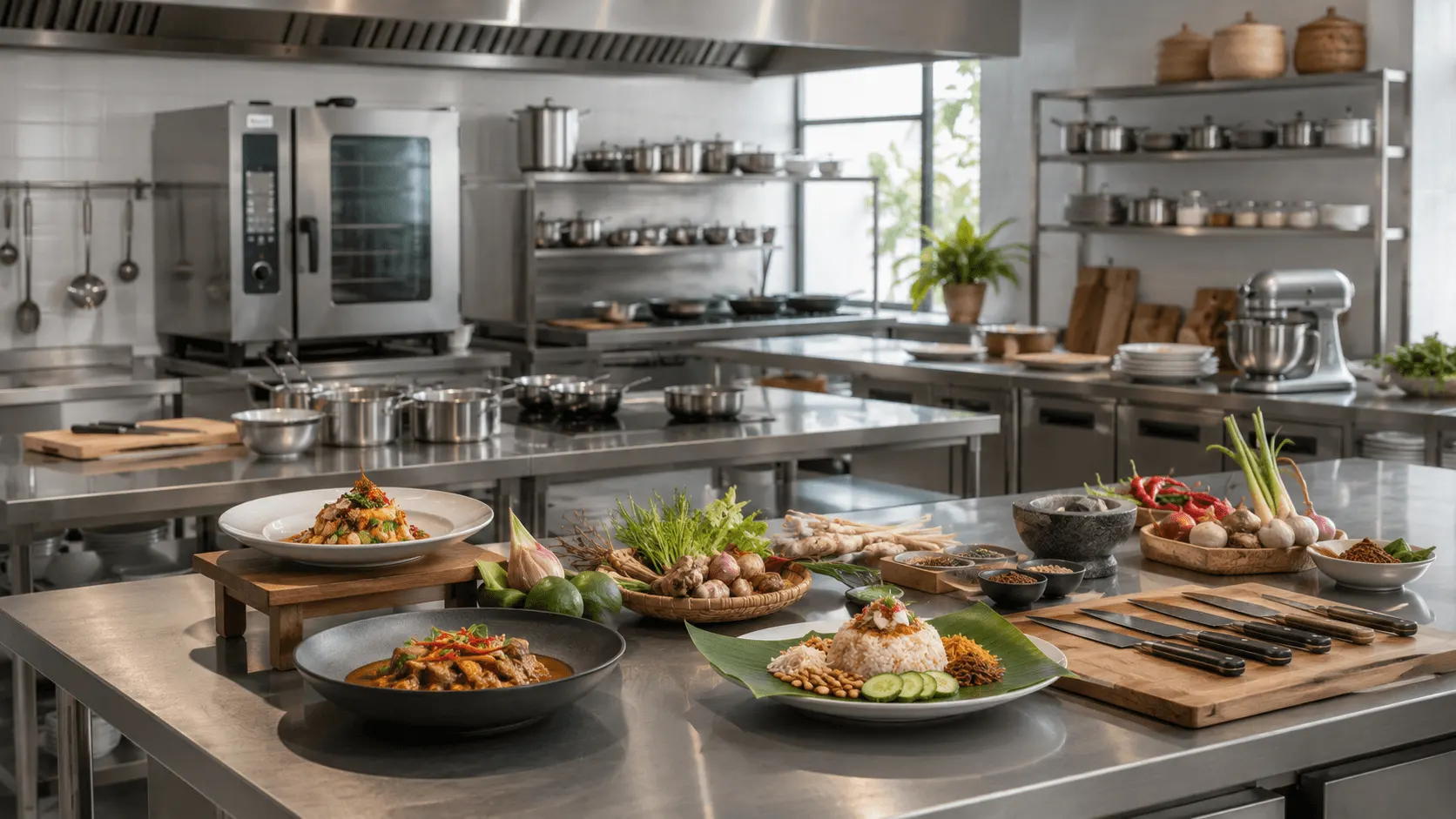
A career in the kitchen no longer means choosing between passion and stability. Malaysia’s food and hospitality industry has grown into one of the country’s most dynamic sectors, and a structured culinary arts course in Malaysia is now one of the clearest, most practical routes into it — whether the goal is working the line in a five-star hotel, building an independent café brand, or moving into food styling and hospitality leadership.
This guide breaks down what a culinary arts curriculum actually covers, the skills it builds, and where graduates end up.
Key Takeaways
- A culinary arts course in Malaysia combines technical cooking skills, food science, kitchen management, and hands-on industrial training rather than classroom theory alone.
- Core techniques taught include knife skills, mother sauces, stocks, baking fundamentals, and professional plating.
- Graduates build both hard skills (cutting, cooking methods, cost control) and soft skills (discipline, teamwork, communication under pressure).
- Career paths extend well beyond the kitchen line — into entrepreneurship, food styling, culinary consulting, content creation, and hospitality management.
- TVET-based culinary programmes at a kolej vokasional kulinari typically combine a shorter, more affordable timeline with the same industry-recognised certification and hands-on training intensity as university-level diplomas.
What Does a Culinary Arts Course Actually Cover?
A genuine culinary arts programme is built around structured skill progression — not casual cooking classes. Learning moves from foundational techniques through to increasing complexity, with formal assessment on technique, execution, and consistency along the way. At its core, the curriculum sits on four pillars: technique, food science, kitchen operations, and real industry exposure.
Core Culinary Techniques
- Professional knife skills and cutting techniques
- Preparation of stocks, mother sauces, soups, and breakfast dishes
- Desserts and pastry plating
- Local, Asian, Western, and international cooking theory and technique
- Basic cooking methods: roasting, broiling, grilling, frying, sautéing
Food Science and Nutrition
Cooking is fundamentally a chemical process, and a solid programme treats it that way. Students learn how temperature, timing, and ingredient interaction affect outcomes, alongside basic nutrition and healthy eating principles — knowledge that strengthens problem-solving in a professional kitchen rather than just following a recipe by rote.
Kitchen Management and Operations
Away from the stove, students study workflow planning, inventory control, cost control, and menu planning. These lessons are what separate a home cook from someone ready to manage a busy commercial kitchen — understanding how to control food cost, plan a menu around seasonality and margin, and keep a station running efficiently during peak service.
Food Safety, Hygiene, and Professional Service
Food safety and sanitation are non-negotiable in a highly regulated industry. Programmes emphasise proper food handling, temperature control, cross-contamination prevention, and professional food presentation and commercial food service standards throughout training — not as a single module, but as an ongoing discipline.
Industrial Training
The strongest culinary arts courses include a dedicated industrial training placement — commonly around three months — placing trainees in real hotel, restaurant, or catering kitchens before graduation. This is where classroom technique becomes real working confidence: timing under pressure, taking direction within a kitchen hierarchy, and executing consistently during actual service.
The Skills You Actually Develop
Technical Skills
- Knife work, heat control, and flavour balancing
- Sauce and stock preparation
- Baking and pastry fundamentals
- Plating and professional food presentation
- Recipe reading and precise execution
Kitchen Discipline and Soft Skills
Beyond technique, structured culinary training builds habits that matter just as much in a professional kitchen:
- Attention to detail — precision in cutting, seasoning, and plating
- Patience — menus and techniques take time to master, and kitchens rarely go exactly to plan
- Cleanliness and organisation — station management and adherence to sanitation standards
- Arithmetic and cost awareness — measuring, scaling, and understanding ingredient cost
- Communication within a brigade — clear, concise instruction reduces friction during service
- Teamwork — coordinating with a kitchen team is central to service success
- Hospitality — the welcoming, guest-focused mindset that underpins the entire industry
These behavioural foundations are what allow graduates to integrate smoothly into a professional kitchen from day one, rather than needing months to adjust.
Career Opportunities for Culinary Arts Graduates
A culinary arts qualification rarely leads down a single path. Because the food and hospitality sectors are so interconnected, culinary training functions as a versatile foundation that opens several distinct career directions.
Professional Chef Track
The most direct route: graduates typically begin as commis chefs or junior kitchen staff in hotels, restaurants, or catering firms, progressing through chef de partie and pastry chef roles toward sous chef or executive chef. Malaysia’s active food scene and steady tourism sector keep demand for skilled kitchen staff consistent.
Restaurant and Food Entrepreneurship
A growing number of graduates start their own cafés, catering businesses, or specialised food concepts, drawing on the cost control, menu development, and kitchen management skills learned during training — the operational side that separates a profitable venture from a passion project that struggles to break even.
Food Styling and Culinary Consulting
Graduates with a strong eye for presentation move into styling plates for advertising, media, and social content, while culinary consultants work behind the scenes helping restaurants and food brands refine menus and kitchen processes.
Food Content Creation
Formal culinary training gives content creators genuine authority — the ability to explain the technique behind a dish, not just show it — which increasingly matters as food media and influencer marketing continue to grow.
Hospitality Management
Hotels, resorts, and larger restaurant groups need operations managers and F&B leaders who understand how a kitchen actually functions. Culinary graduates who move into these roles bring an operational credibility that purely business-trained managers often lack.
Culinary Arts Course vs. University Culinary Degree
Both a university-level culinary diploma and a kolej vokasional kulinari programme build toward recognised, industry-aligned qualifications — the meaningful difference tends to be timeline, cost, and format rather than skill depth.
TVET-based culinary training is typically built around a defined skills framework (in Malaysia, this usually means Sijil Kemahiran Malaysia certification under JPK), delivered over a shorter, more focused duration with a heavy emphasis on hands-on kitchen hours and a structured industrial training placement — making it a practical, faster route into the workforce for school leavers who want to start earning and building experience sooner rather than later.
Noble School’s Culinary Arts Course in Perak
Noble School City Campus (NSCC), a recognised 5-Star TVET institution in Taiping, Perak, offers a Culinary Arts Operations programme built directly around this framework:
Detail | Information |
NOSS Code | I561-005-3:2022 |
Duration | 17 months |
Certification | Sijil Kemahiran Malaysia (SKM) |
Industrial Training | 3 months |
The programme covers professional cutting techniques, preparation of stocks, mother sauces, soups and breakfast dishes, desserts and pastry plating, commercial food service, professional food presentation, basic nutrition, and cost control and menu planning — culminating in a three-month industrial placement designed to build real working confidence before graduation.
Career prospects for graduates include: chef or assistant chef in hotels and restaurants, cruise ship or personal chef roles, food supplier or kitchen artist positions, and catering or café entrepreneurship.
For those wanting a broader qualification, Noble School’s Diploma in Food Preparation & Production Services covers a wider scope of commercial food preparation at diploma level, also with a three-month industrial training component.
How to Apply
- Review the Culinary Arts Operations programme details and confirm the entry requirements.
- Contact the NSCC admissions team via phone, WhatsApp, or email to check the current intake and fee information.
- Book a campus visit to see the culinary training kitchen and facilities firsthand.
- Submit the required documents (academic results and identification, per programme requirements).
- Confirm your place once eligibility is verified by the campus team.
Frequently Asked Questions
What do you learn in a culinary arts course in Malaysia?
A structured programme covers professional cutting techniques, stocks and mother sauces, baking and pastry fundamentals, commercial food service, nutrition basics, cost control and menu planning, plus a hands-on industrial training placement.
How long does a culinary arts course take?
At the certificate level (SKM), programmes commonly run around 17 months including industrial training. Diploma-level programmes and university culinary diplomas may run for a different duration depending on the institution and depth of curriculum.
What jobs can I get after a culinary arts course?
Common paths include chef roles in hotels and restaurants, catering or café entrepreneurship, food styling and culinary consulting, food content creation, and hospitality or F&B management roles.
Is a TVET culinary course as good as a university culinary diploma?
Both lead to recognised, industry-aligned qualifications. A TVET route through a kolej vokasional kulinari tends to be shorter and more cost-effective, with an equally strong emphasis on hands-on kitchen hours and real industrial training exposure.
Do culinary arts courses include real kitchen work experience?
Yes — reputable programmes include a dedicated industrial training placement, commonly around three months, in an actual hotel, restaurant, or catering kitchen before graduation.
Starting Your Culinary Career
A genuine culinary arts course in Malaysia builds far more than cooking know-how — it builds the technical precision, kitchen discipline, and real industry exposure that employers actually look for, and opens doors well beyond the traditional kitchen line into entrepreneurship, media, and hospitality leadership.
If you’re exploring hands-on training at a recognised kolej vokasional kulinari in Perak, explore the Culinary Arts Operations programme at Noble School, or get in touch to book a campus visit.