If you love being in the kitchen but aren’t sure whether you’re meant to be the chef plating a signature dish or the one running a tight, efficient kitchen operation — you’re asking exactly the right question before choosing between Operasi Seni Kulinari and Diploma Perkhidmatan Penyediaan & Pembuatan Makanan at Noble School City Campus (NSCC).
Both paths lead into the food industry, but they train you for genuinely different roles — and picking the right one from the start saves you time, money, and a possible mid-course switch.
Key Takeaways
- Culinary Arts (Operasi Seni Kulinari) is a 17-month programme focused on chef-level technique, creativity, and presentation — leading to Sijil Kemahiran Malaysia (SKM) certification.
- Food Preparation & Production (Diploma Perkhidmatan Penyediaan & Pembuatan Makanan) is a 10-month diploma focused on kitchen operations, food safety, and F&B service management.
- Both include 3 months of industrial training, giving students real workplace exposure before graduating.
- Culinary Arts leans toward chef and creative kitchen roles; Food Preparation leans toward supervisory, operations, and F&B service roles.
- Your choice should come down to whether you’re drawn to hands-on cooking and technique or running and managing a food operation.
- Both are delivered at NSCC as a registered ILKS, so either path gives you recognised, industry-aligned training.
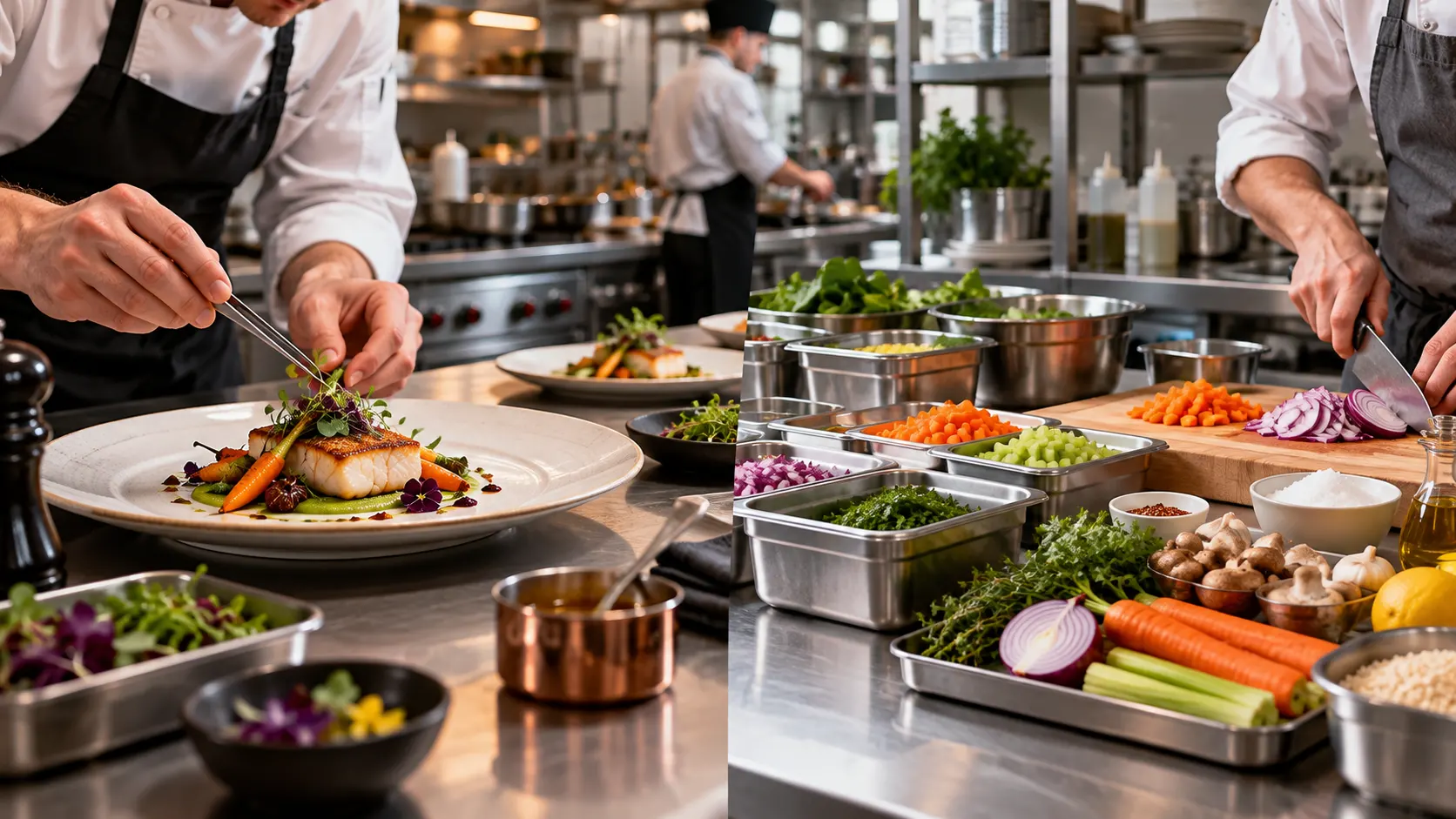
A culinary arts course in Malaysia and a general food preparation programme might sound similar from the outside, but the day-to-day training — and where it takes you afterward — looks quite different.
What Is a Culinary Arts Programme?
Operasi Seni Kulinari (Culinary Arts Operations) is a 17-month programme, including 3 months of industrial training, built around developing you as a skilled cook and future chef. The curriculum goes deep into technique and craft:
- Professional cutting techniques
- Stock preparation, mother sauces, soups, and breakfast dishes
- Desserts and pastry plating
- Commercial food service and professional food presentation
- Basic nutrition and healthy eating
- Cost control and menu planning
- Local and international cuisine
This culinary program leads to Sijil Kemahiran Malaysia (SKM) certification, aligned with the national occupational skills standard for culinary operations (NOSS code I561-005-3:2022) under JPK. It’s built for students who want to grow into chef or kitchen-creative roles.
What Is a Food Preparation & Production Programme?
Diploma Perkhidmatan Penyediaan & Pembuatan Makanan (Diploma in Food Preparation & Production Services) is a shorter, 10-month diploma, also including 3 months of industrial training, with a broader focus on how a food operation actually runs. Its curriculum covers:
- Food sanitation and kitchen safety
- Food and nutrition
- Malaysian, Asian, Western, and international cooking theory and techniques
- Bread, pastry, and dessert making
- Kitchen operations management
- Food and beverage service
- Menu planning and cost control
- Customer service and entrepreneurship
Rather than SKM certification, this programme awards a Diploma, and its scope extends beyond the kitchen into food and beverage service, kitchen supervision, and operational management — making it a good fit for students who want a broader, faster route into the food service industry.
Culinary Arts vs Food Preparation: Side-by-Side Comparison
Culinary Arts (Operasi Seni Kulinari) | Food Preparation & Production (Diploma) | |
|---|---|---|
Duration | 17 months (incl. 3 months industrial training) | 10 months (incl. 3 months industrial training) |
Core focus | Chef technique, plating, creative cuisine | Kitchen operations, food safety, F&B service |
Certification | Sijil Kemahiran Malaysia (SKM), NOSS code I561-005-3:2022 | Diploma, NOSS code HT-012-4:2011 |
Governing body | Jabatan Pembangunan Kemahiran (JPK) | Jabatan Pembangunan Kemahiran (JPK) |
Signature modules | Professional cutting techniques, mother sauces and stocks, dessert and pastry plating, cost control and menu planning | Food sanitation and kitchen safety, Malaysian/Asian/Western cooking theory, F&B service, customer service and entrepreneurship |
Skill emphasis | Individual craft and presentation — how a dish is made and plated | Operational scope — how a kitchen or F&B outlet runs day to day |
Entry point into industry | Entry-level chef or kitchen specialist roles | Entry-level supervisory or F&B service roles |
Breadth of scope | Narrower, deeper — concentrated on cooking technique itself | Broader — covers cooking, service, safety, and basic business skills |
Best suited for | Students who want to become chefs or culinary specialists | Students who want faster, broader entry into F&B operations |
Pace to workforce | Longer, deeper technical training | Faster entry into the industry |
On certification and progression: Culinary Arts leads to an SKM-based qualification, which sits within Malaysia’s national skills certification structure — meaning it’s built for students who may want to continue progressing through further JPK-recognised skills levels later in their career.
The Food Preparation & Production programme instead awards a standalone Diploma, giving graduates a broader operational qualification suited to F&B service and supervisory roles from day one, without being tied to the SKM skills-level structure.
On curriculum depth vs breadth: The two programmes aren’t just different lengths — they’re different shapes. Culinary Arts spends its extra months going deeper into technique: professional cutting, mother sauces, and plating are given real room to develop.
Food Preparation & Production covers cooking technique too, but spreads its curriculum wider to include food safety systems, F&B service standards, and customer-facing and entrepreneurship skills — reflecting its goal of preparing students for operational and service roles, not just the kitchen itself.
On industry entry level: Because Culinary Arts concentrates on craft and technique for a longer period, graduates typically enter the industry with a stronger technical foundation suited to kitchen-floor chef roles.
Food Preparation & Production graduates, with their broader exposure to service and operations, are often better positioned for roles that blend kitchen work with supervisory or front-of-house responsibilities earlier in their careers.
Career Paths: Where Each Programme Can Take You
Culinary Arts graduates typically move toward:
- Chef or assistant chef in hotels and restaurants
- Cruise ship chef or personal chef
- Food supplier or specialist “kitchen artist”
- Catering or café entrepreneur
- Culinary skills instructor or trainer
Food Preparation & Production graduates typically move toward:
- Chef de Partie / Jurumasak in hotels, restaurants, hospitals, or cruise ships
- Kitchen supervisor or assistant
- Catering operator or food supplier
- Culinary instructor
- Cookbook writer or food stylist
- Food and beverage supervisor
Both lists overlap in the food industry, but notice the difference in altitude: Culinary Arts points you toward the craft itself, while Food Preparation points you toward running the operation around that craft — including Pembuatan Roti, NSCC’s dedicated bakery programme, for students who want to specialise even further after either path.
Which Programme Fits You Best?
Do you want to specialise in technique, or manage the bigger picture?
If you’re drawn to knife skills, sauce-making, and plating, Culinary Arts is the closer fit. If you’re more interested in how a kitchen or F&B outlet runs end to end, Food Preparation fits better.
How soon do you want to enter the workforce?
Food Preparation’s 10-month timeline gets you into the industry faster. Culinary Arts’ 17-month timeline builds deeper technical mastery before you graduate.
What’s your long-term goal?
Aiming to become a specialist chef or open your own kitchen concept favours Culinary Arts. Aiming for F&B supervision, hotel kitchen management, or a broader service role favours Food Preparation.
Can you only decide once you’ve tried it?
That’s normal — speak to the admissions team at Noble School City Campus (NSCC) about sitting in on a class or facility tour before committing.
Conclusion: Two Paths, One Industry
Culinary Arts and Food Preparation & Production both open doors into Malaysia’s food and hospitality industry — the real difference is whether you want to master the craft behind the plate or the operation behind the kitchen. Neither choice is wrong; it’s about matching the programme to the career you actually want.
Still unsure which path suits you? Hubungi Kami to speak with our admissions team, or register your interest today and let Noble School help you decide.
Noble School — Membina Masa Depan Melalui Latihan TVET Bertaraf Industri.